Category Archives: Anthology or Collection

6 Favorite Quotes from Winnie-the-Pooh and The House at Pooh Corner by A. A. Milne

6 Favorite Quotes from Winnie the Pooh

The 100th Anniversary of Winnie-the-Pooh

October of this year marks the 100th anniversary of the beloved classic, Winnie-the-Pooh. I grew up with Pooh stories and Milne’s poetry (my mom used to quote his poem about turning five pretty regularly).

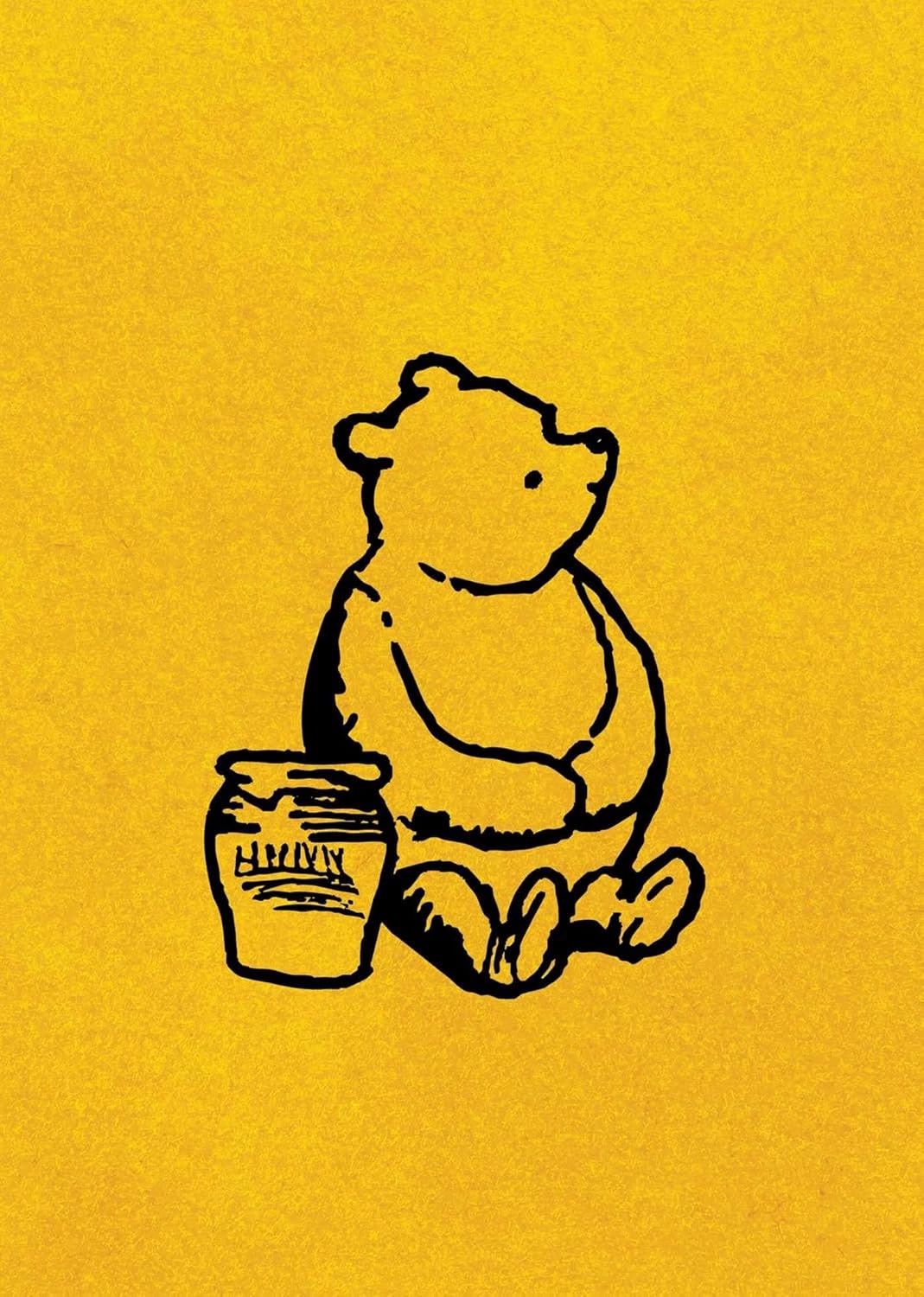
Simon & Schuster sent me a really nice copy of the 100th Anniversary edition, which has a soft, flocked cover with a simple illustration of the bear himself. It’s a great size for little hands, and the cover has a great texture. The inside features the original illustrations by Ernest H. Shepard.
In honor of this new edition and 100 years of Winnie the Pooh, I thought it would be fun to share some of my favorite quotes from Winnie-the-Pooh and The House Around Pooh Corner.

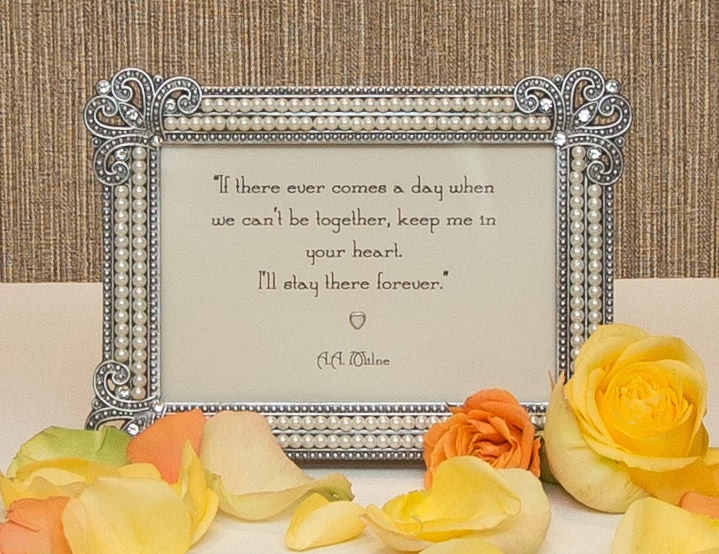
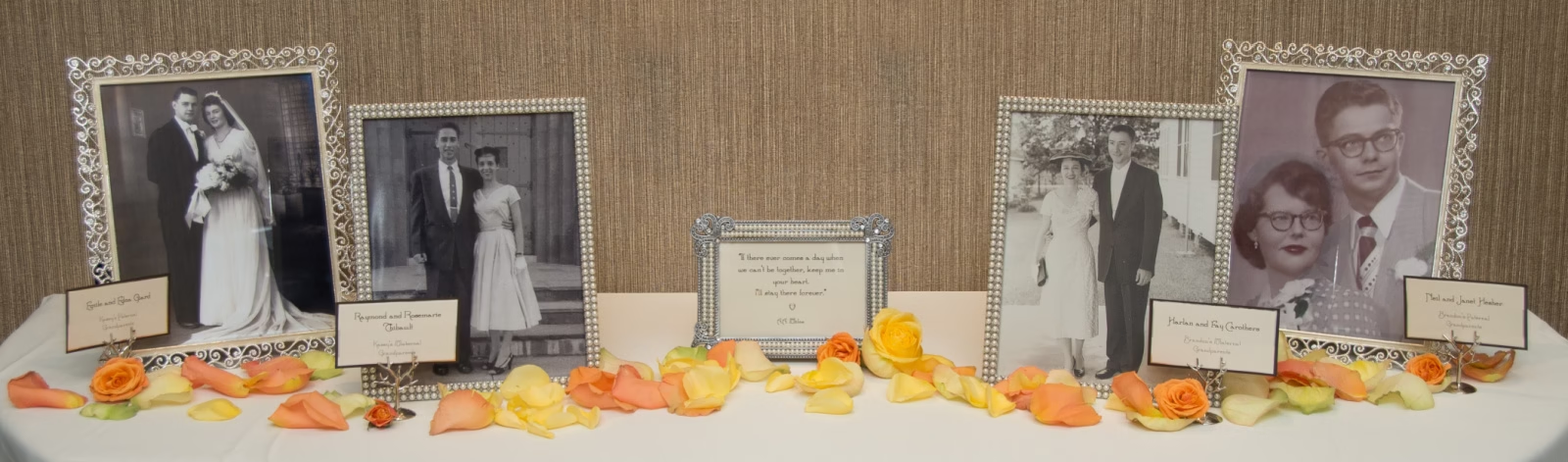
The quote that inspired this post, it turns out, isn’t from the book at all but from the Disney movie. I have a small frame with the quote inside that was on a table at my wedding. Between the time my partner proposed and we married, three of our grandparents passed away, and the remaining grandmother was too ill to attend the ceremony. We placed the quote on a table with photos of our grandparents.
6 Favorite Quotes from Winnie-the-Pooh and The House at Pooh Corner

“I think we dream so we don’t have to be apart for so long. If we’re in each other’s dreams, we can be together all the time.” – A. A. Milne, Winnie-the-Pooh

“People say nothing is impossible, but I do nothing every day.” – A. A. Milne, Winnie-the-Pooh

“You can’t stay in your corner of the Forest waiting for others to come to you. You have to go to them sometimes.” – A. A. Milne, Winnie-the-Pooh

“Piglet noticed that even though he had a Very Small Heart, it could hold a rather large amount of Gratitude.” – A. A. Milne, Winnie-the-Pooh

“Poetry and Hums aren’t things which you get, they’re things which get you. And all you can do is to go where they can find you.” – A. A. Milne, The House at Pooh Corner

“Wherever they go, and whatever happens to them on the way, in that enchanted place on the top of the forest, a little boy and his Bear will always be playing.” – A. A. Milne, The House at Pooh Corner

Winnie-the-Pooh 100th Anniversary Edition (Winnie-the-Pooh and The House at Pooh Corner)
A. A. Milne
Illustrated by Ernest H. Shepard
Aladdin Books
Published January 6, 2026

About Winnie-the-Pooh 100th Anniversary Edition (Winnie-the-Pooh and The House at Pooh Corner)

Amazon | Bookshop | Goodreads | My Reviews

Celebrate the 100th anniversary of everyone’s favorite bear-of-little-brain with this special bind-up edition of A. A. Milne’s classic novels Winnie-the-Pooh and The House at Pooh Corner—featuring a flocked cover that’s soft to the touch.

The story of the honey-loving, bumbling bear Winnie-the-Pooh has been a staple in children’s libraries since its original publication in the 1900s. Venture into the Hundred Acre Wood and join sweet Pooh, understanding Christopher Robin, timid Piglet, downcast Eeyore, impatient Rabbit, loquacious Owl, loving Kanga and Roo, and bold Tigger on their exploits.

In each chapter, they have a new adventure, from searching for honey or celebrating birthdays to hunting Heffalumps or navigating a flood. Complete with the original black-and-white interior illustrations by Ernest Shepard, this edition is the perfect way to experience the children’s classic that has captured imaginations for the past century.

Note: This post contains affiliate links, which do not cost you anything to use but help support this blog. I received a free copy of this book in exchange for my honest review. All opinions are my own.

What are your favorite quotes from childhood books?

Are there quotes from your favorite childhood books that immediately take you back to the moment you read them as a little kid? What books stand out in your memory as favorites? Leave a comment and let me know.

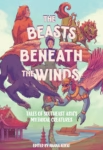
MMGM Review: The Beasts Beneath the Wind edited by Hanna Alkaf

Version 1.0.0

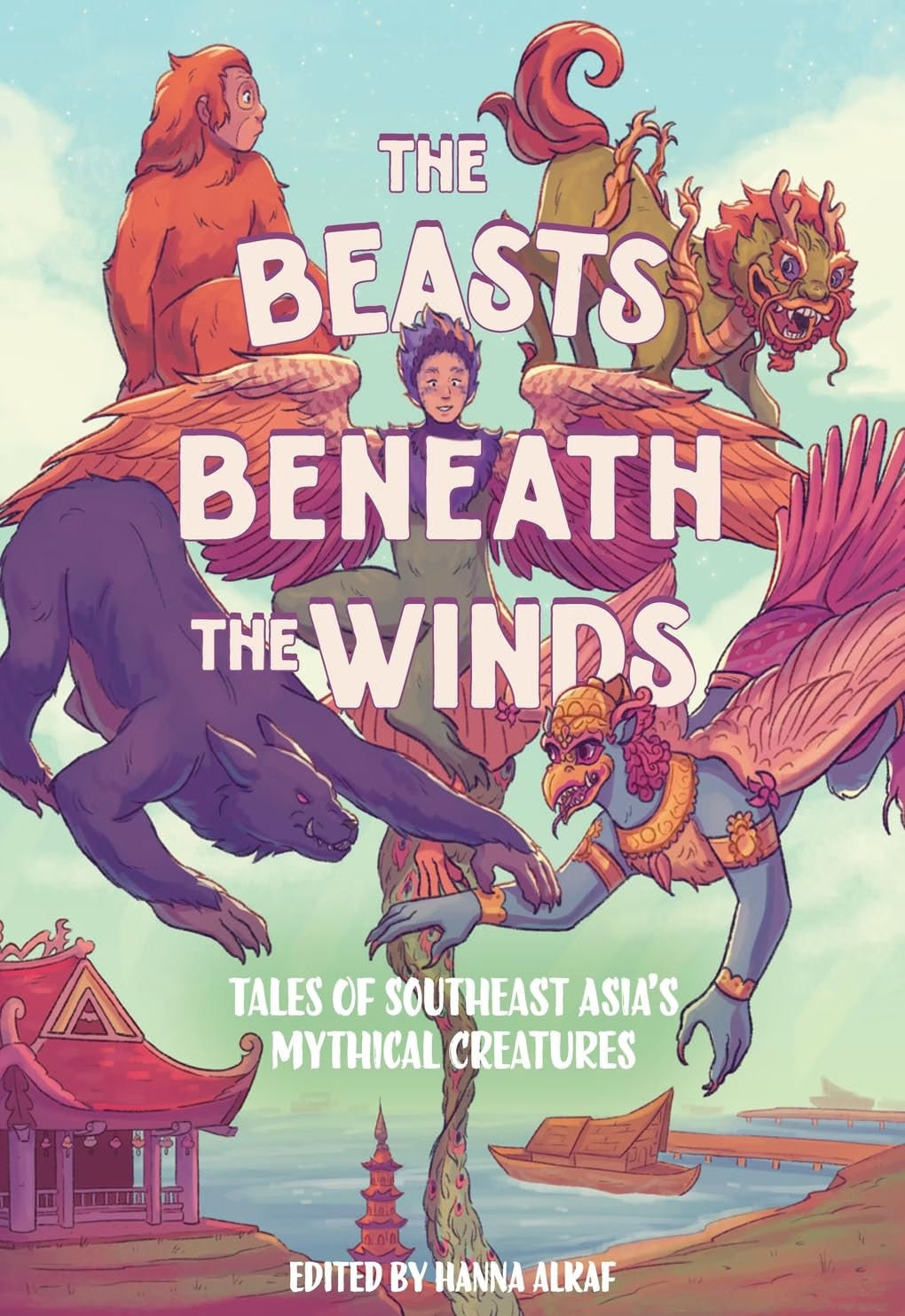
The Beasts Beneath the Wind: Tales of Southeast Asia’s Mythical Creatures
edited by Hanna Alkaf
Harry N. Abrams
Published October 21, 2025

Amazon | Bookshop | Goodreads

About The Beasts Beneath the Wind

A sweeping and magical story collection showcasing the mythical creatures of Southeast Asia, including work by two-time Newbery medalist Erin Entrada Kelly and National Book Award finalist Shing Yin Khor

A turtle the size of an island. A cricket that can possess you if swallowed. A giant who turns enemies to stone. The legends of Southeast Asia—or “the lands below the winds,” as explorers used to call it—are populated with a whole menagerie of colorful beasts that inspire awe and fear in equal measure. Yet, passed on as they are through story and song, so many of these stories remain rooted in some long-forgotten past and bound by the borders of the region, creatures of myth and memory and nothing more. Until now.

Welcome to The Beasts Beneath the Winds, a collection of Southeast Asia’s most elusive cryptids by a team of bestselling and award-winning authors. Within these gorgeously illustrated pages, readers will find the stories of seventeen regular kids who encounter these mythical creatures in the here and now, and—fortunately or unfortunately—live to tell the tale.

My Review

I love how upbeat the tone of this whole collection is. Between each story, a two page spread that looks like pages from a journal introduces a cryptid. Illustrations show what the creature looks like while text describes where it lives, its temperament, and what it’s known for.

The stories often center around family relationships and connecting or reconnecting with the protagonist’s culture. Some stories are set in Southeast Asian countries while others happen in the United States. Sometimes the main character learns something unexpected about a friend or relative through their experience with the cryptid. At other times, the beast appears to impart wisdom or simply remind the protagonist that the world is a larger, more mysterious place than they realized.

I also love that this book introduces Southeast Asian mythology to readers in the context of short stories. This would be a perfect book to begin with for readers interested in folklore but who don’t generally reach for nonfiction. A list of further reading recommendations would have been amazing to add.

All in all, this is an entertaining collection that’s sure to engage readers.

Content Notes

Recommended for Ages 8 to12.

Profanity/Crude Language Content
None.

Romance/Sexual Content
None.

Spiritual Content
Contains stories about mythological beasts from Southeast Asian folklore and myths. Reference to Muslim holidays and prayer practices.

Violent Content
Situations of peril. In one story, characters stop poachers. In another, a character intervenes to help a creature battling an evil being.

Drug Content
None.

Note: This post contains affiliate links, which do not cost you anything to use but help support this blog. I received a free copy of this book in exchange for my honest review. All opinions are my own.

Marvelous Middle-Grade Monday

I’m sharing this post as a part of a weekly round-up of middle-grade posts called Marvelous Middle-Grade Monday. Check out other blogs with posts about middle-grade books today on Marvelous Middle-Grade Mondays at Always in the Middle.

Review: These Bodies Ain’t Broken edited by Madeline Dyer

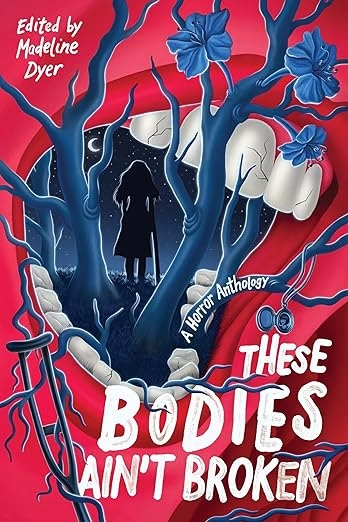
These Bodies Ain’t Broken
edited by Madeline Dyer
Page Street YA
Published October 7, 2025

Amazon | Bookshop | Goodreads

About These Bodies Ain’t Broken

A monstrous transformation within your own body.
A sacrificial imprisonment.
A fight to the death against an ancient evil.

These stories showcase disabled characters winning against all odds.

Outsmarting deadly video games, hunting the predatory monster in the woods, rooting out evil within their community, finding love and revenge with their newly turned vampire friend—this anthology upends expectations of the roles disabled people can play in horror. With visibly and invisibly disabled characters whose illnesses include Ehlers-Danlos syndrome, Crohn’s disease, diabetes, PTSD, and more, each entry also includes a short essay from the author about the conditions portrayed in their stories to further contextualize their characters’ perspectives. From breaking ancient curses to defying death itself, these 13 horror stories cast disabled characters as heroes we can all root for.

Contributors include bestselling and award-winning as well as emerging authors: Dana Mele, Lillie Lainoff, Soumi Roy, Anandi, Fin Leary, S.E. Anderson, K. Ancrum, Pintip Dunn, Lily Meade, Mo Netz, P.H. Low, and Carly Nugent.

My Review

I love the premise of this collection and how it’s set up. The anthology opens with a note from Madeline Dyer commenting on how horror often limits the presence of disabled characters to the villain roles. (For more on this, please read Amanda LeDuc’s incredible book, Disfigured: On Fairytales, Disability, and Making Space.) This collection gives its disabled characters protagonist roles. A brief essay by the author accompanies each short story, where the author will, if desired, offer information about their experiences that informed the writing in the short story. The essay offers some context about the disability represented in the work, too.

I really like how the disabilities represented in each story impact the protagonist’s experience. There’s no magical healing. There’s no special exception to the rules simply because plot. These protagonists must fight their way through literal horrors despite the limits of their bodies.

The stories span many places and range from long past to present-day settings. Some characters are in the midst of adjusting to or preparing to leave for college while others navigate grief, military capture, and long distance moves.

Because horror has so many layers and often requires buildup, I imagine it was challenging to write succinct, compelling tales. While a few had some meandering moments, most drew me immediately into the strangeness of the story and had me rooting for the main character to make it through.

Content Notes

Recommended for Ages 16 up.

Profanity/Crude Language Content
Strong profanity used infrequently.

Romance/Sexual Content
Reference to romantic feelings. Kissing. Mentions of marriage and pressure to become pregnant. References to child marriage.

Spiritual Content
Reference to spiritual beliefs and practices, including sacrificial rituals. Reference to Catholic services and practices.

Violent Content
Some stories contain instances of ableism, homophobia, transphobia, and bullying. Some instances of body horror and gore. References to murder, imprisonment, and assault. One story has implied sexual assault, reference to child marriage, and emotional abuse. Some stories show self-harm, suicidal ideation, or mention of suicide. A couple stories include references to cannibalism, and one includes human sacrifice.

Drug Content
Characters drink alcohol in several stories.

Note: This post contains affiliate links, which do not cost you anything to use but help support this blog. I received a free copy of this book in exchange for my honest review. All opinions are my own.

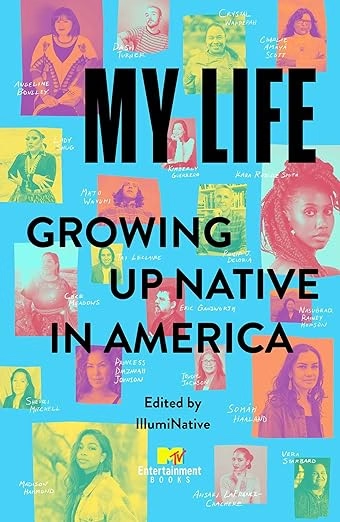
Review: My Life: Growing Up Native in America edited by IllumiNative

My Life: Growing Up Native in America
IllumiNative
MTV Books
Published October 1, 2024

Amazon | Bookshop | Goodreads

About My Life: Growing Up Native in America

A moving collection of twenty powerful essays, poems, and more that capture and celebrate the modern Native American experience, featuring entries by Angeline Boulley, Madison Hammond, Kara Roselle Smith, and many more.

With heart, pathos, humor, and insight, 20 renowned writers, performers, athletes, and activists explore what it means to be Native American today. Through a series of essays and poems, these luminaries give voice to their individual experiences while shedding light on the depth and complexity of modern Native American identity, resiliency, and joy.

The topics are as fascinating and diverse as the creators. From Mato Wayuhi, award-winning composer of Reservation Dogs, honoring a friend who believed in his talent to New York Times bestselling author Angeline Boulley exploring what it means to feel Native enough, these entries are not only an exploration of community, they are also a call for a more just and equitable world, and a road map toward a brighter future.

Edited by IllumiNative, an organization dedicated to amplifying contemporary Native voices, My Life: Growing Up Native in America features contributions from Angeline Boulley, Philip J. Deloria, Eric Gansworth, Kimberly Guerrero, Somah Haaland, Madison Hammond, Nasugraq Rainey Hopson, Trudie Jackson, Princess Daazhraii Johnson, Lady Shug, Ahsaki Baa LaFrance-Chachere, Taietsaró Leclaire, Cece Meadows, Sherri Mitchell, Charlie Amaya Scott, Kara Roselle Smith, Vera Starbard, Dash Turner, Crystal Wahpepah, and Mato Wayuhi.

My Review

This collection features everything from narrative essays recounting deeply formative experiences to poetry to advice for young readers on finding success and happiness. Some explore one’s relationship with oneself. Others unpack their experiences, examining internalized racism and prejudice directed at them.

Each piece differs in style, but the common theme running through them all is a love for Indigenous communities and hope and optimism about the future. The authors come from different tribes and geographical areas, and some share a snippet or two of history. This really highlights the differences in experiences that someone from one tribe may have from another, and yet simultaneously draws attention to the values and beliefs that run true across tribal lines.

I listened to this collection as an audiobook, and I really enjoyed it. I went back and reread some of the entries via the ebook version so that I could sit with the ideas a little more deeply in a few of the entries, especially the poetry.

While the intended audience of this book is young Indigenous readers, I would recommend that anyone read it. How often do we get a chance to listen to so many different Indigenous perspectives in one place? It’s a quick read and definitely worth checking out.

Content Notes

Recommended for Ages 12 up.

Profanity/Crude Language Content
Very few instances of profanity.

Romance/Sexual Content
References to a romantic relationship.

Spiritual Content
References to offerings and traditions, beliefs, and rituals.

Violent Content
References to racism and indian residential schools. One essay explores an instance in which someone was bullied for their appearance. One essay briefly mentions that the author attempted suicide at one point in life.

Drug Content
References to alcohol use.

Note: This post contains affiliate links, which do not cost you anything to use but help support this blog. I borrowed a copy of this book from the public library. All opinions are my own.

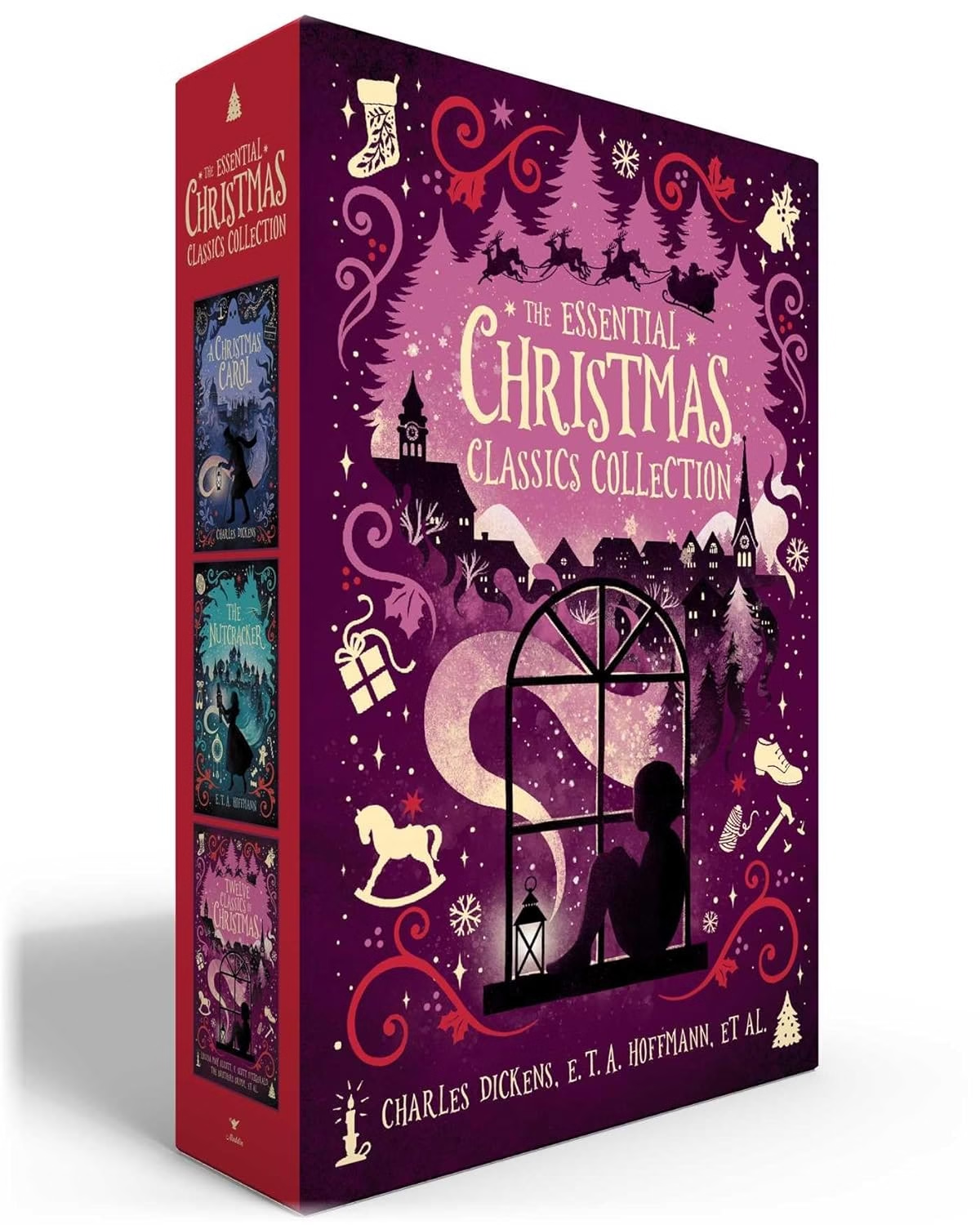
Review: The Essential Christmas Classics by Charles Dickens, ETA Hoffman, et al

The Essential Christmas Classics Boxed Set by
Charles Dickens, E. T. A. Hoffman et al
Aladdin
Published October 7, 2025

Amazon | Bookshop | Goodreads

About The Essential Christmas Classics Collection (Boxed Set)

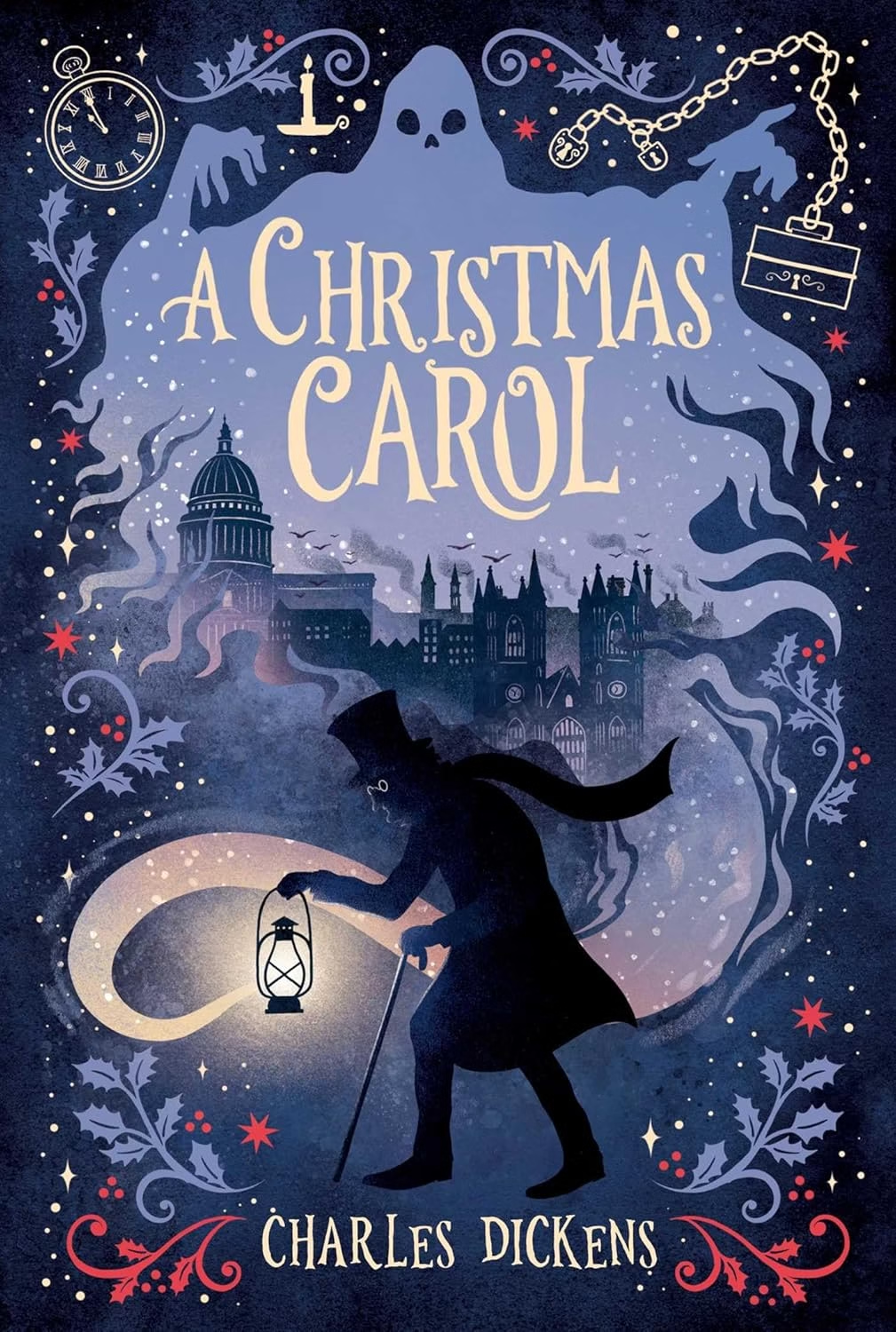
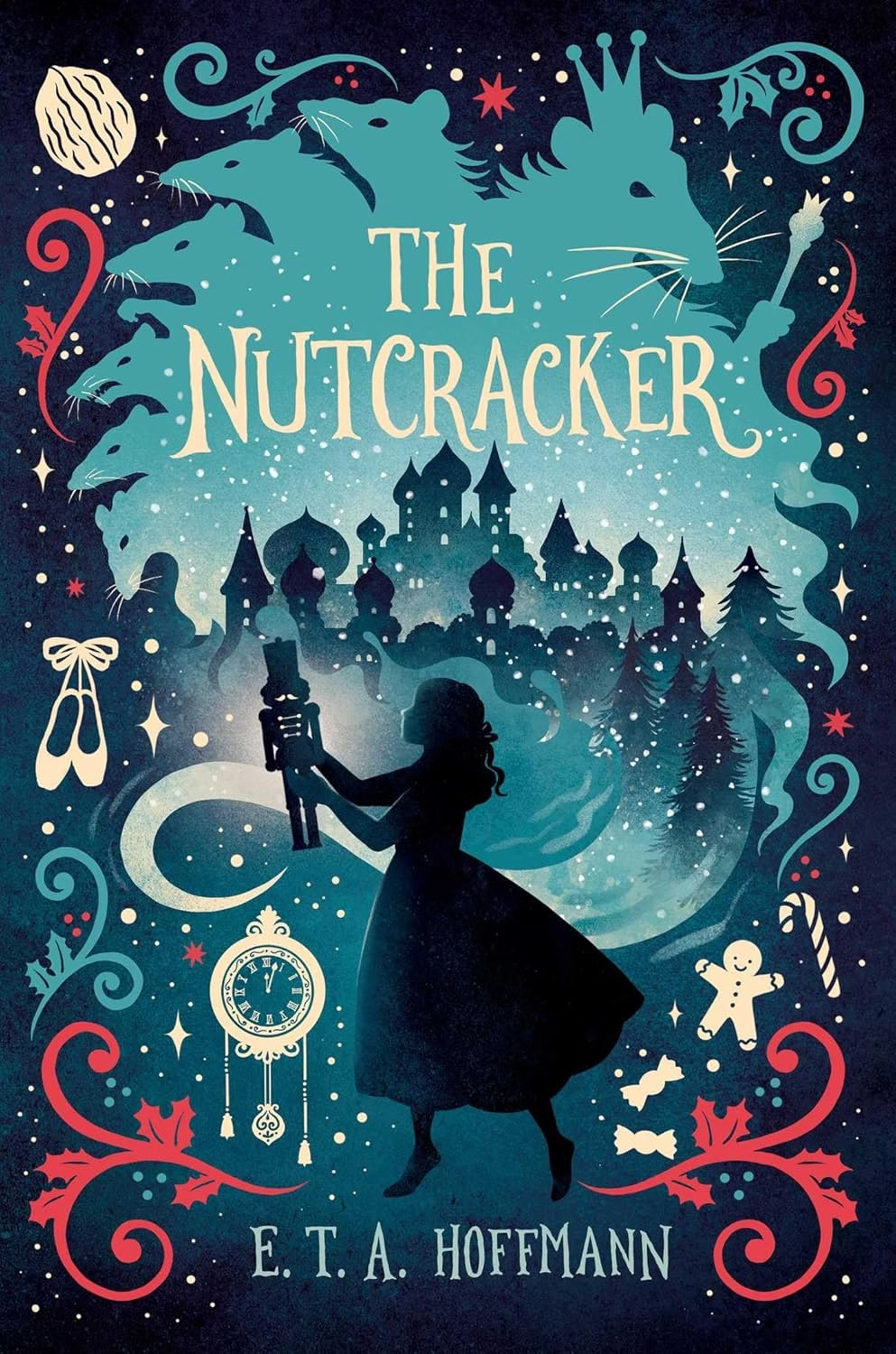
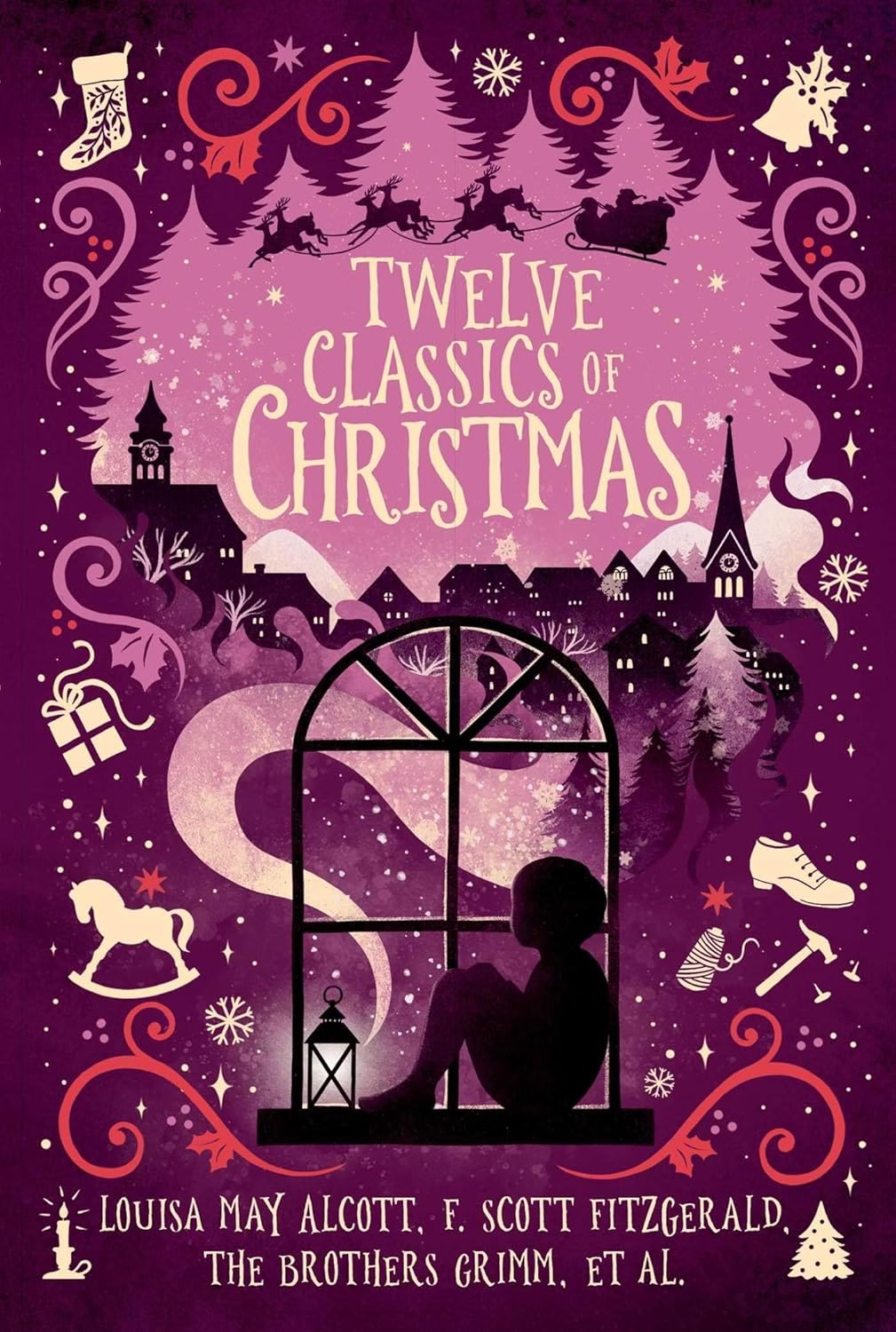
Celebrate the holidays with this collection of Christmas classics, including A Christmas CarolThe Nutcracker, and a collection of holiday short stories—together in one hardcover boxed set!

Celebrate the season with this collection of popular holiday stories from Christmases past. This set includes E. T. A. Hoffmann’s The Nutcracker, the story of a girl’s Christmas gift coming to life and battling the sinister mouse king, which later inspired Tchaikovsky’s popular holiday ballet. Next is A Christmas Carol, Charles Dickens’s renowned novella about the miserly Ebeneezer Scrooge being confronted with his greed and learning the meaning of Christmas.

Rounding out the set is TheTwelve Classics of Christmas, a collection of twelve holiday short stories. From favorites like Clement C. Moore’s “‘Twas the Night Before Christmas” and O. Henry’s “The Gift of the Magi” to lesser-known tales from beloved authors like Louisa May Alcott, F. Scott Fitzgerald, and the Brothers Grimm, this anthology is the perfect way to count down to Christmas.

My Reviews

A Christmas Carol by Charles Dickens

This isn’t the first time I’ve read this classic Christmas tale, but it’s the first time I’ve read it in print in a while. Some of the language in this edition is updated to make it a little more modern, but the story still resonates with its powerful themes about charity, kindness, and caring for others.

One element from the story that I can’t unsee is its antisemitic tropes in the setup of the characters of Ebenezer Scrooge and Jacob Marley. Both are miserly men who worked as moneylenders and refused to offer charity to others.

Another icky component is the writing about the famous disabled character. Dickens uses the overly angelic and wise beyond his years Tiny Tim to emphasize the poor and disabled as in need of pity.

I like the message about giving charitably, lifting others up, and offering kindness to those around us as central to the Christmas spirit. It’s strange to think that when I grew up, no one considered this novel as antithetical to the Christian message about Christmas. I’m not sure that is still true.

Certainly anyone believing empathy is a sin would find Scrooge facing eternally punished for refusing to give his wealth to the poor mightily uncomfortable at least. Which is absolutely wild. If you went back in time to my most fervent evangelical days and told me that many of the church leaders I so looked up to would reject empathy and charity as wicked, I wouldn’t have believed you.

Nevertheless, I think that with some additional discussion about the ableism and harmful stereotypes, this book still serves as a reminder of the central values of the Christmas holiday. A lesson far too many of us need to remember.

Content Notes

Recommended for ages 10 up. Ableism surrounding a disabled character. Racist Jewish stereotypes. A total of four ghosts (including his former partner) appear to Scrooge, spiriting him through Christmases of the past, present, and future.

The Nutcracker by E. T. A. Hoffman

This is the original story that inspired the famous ballet by the same title. It’s easy to see how the ballet emerged from the book, but a lot of things happen in these pages that didn’t make it to the stage. Drosselmeier, the clever Godfather who fixes the family’s clocks and makes incredible mechanical toys, appears more morally gray than his ballet counterpart. He makes fun of the main character (named Maria, not Clara) for liking the Nutcracker, whom he intended as a gift for the family, not specifically for her. At one point, he tells a long story to Maria and her brother that spans several chapter and involves a conflict between a king and a mouse queen. This story reveals the identities of the two sides battling in Maria’s playroom.

One thing that I found strange is that Maria is only seven years old when the story takes place. Yet at the end, she gets married to an adult man. It’s also super weird that Maria’s Godfather appears to know the (human) identity of the Nutcracker, but he gave him to Maria’s family as a Christmas gift.

It was interesting to read the original story and see how the ballet was inspired by the elements of the tale. I’m not sure I would have read this book on my own. I think today’s young readers will need some additional context for some moments in the text. Readers curious about the origins of the Nutcracker ballet may find this book appealing.

Content Notes

Recommended for ages 10 up. Situations of peril. A battle between toys and mice leaves toys broken and some mice dead. Descriptions of capturing and killing mice. A mouse torments a girl at night.

Twelve Classics of Christmas by Various Authors

This collection of short Christmas stories features some familiar tales, such as the famous poem about the night before Christmas, the Grimm Brothers’ story of “The Elves and the Shoemaker”, and “The Gift of the Magi” by O’Henry. Other stories might be less familiar than their authors. Short stories by L. Frank Baum, L. M. Montgomery, Louisa May Alcott, Charles Dickens, and F. Scott Fitzgerald appear in the collection.

The stories by Alcott and Montgomery were my favorites. Both centered on the idea of charity being a central value of the Christmas holiday. They reminded me of the kinds of characters in their novels, so I enjoyed that. Other stories were a little darker, including “A Kidnapped Santa Claus” in which a team of demons who live near Santa’s workshop kidnap the jolly old elf in order to sow chaos among the children on earth. Dickens offers a predictably eerie story about a cruel gravedigger’s encounter with goblins that makes him change his ways.

Content Notes

Recommended for ages 10 up. Some stories contain magical or spiritual creatures such as demons, goblins, etc. The elves appearing in one story at first have no clothes. (There are no illustrations in the collection.) Some stories contain mentions of going to church. Two stories mention the birth of Jesus and contain characters searching for him.

Note: This post contains affiliate links, which do not cost you anything to use but help support this blog. I received a free copy the three books in this boxed set in exchange for my honest review. All opinions are my own.

Review: This is How We Roll edited by Rosiee Thor

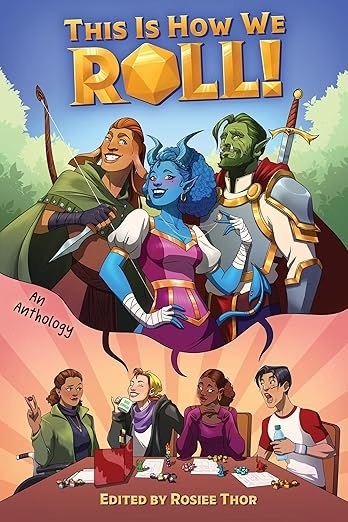
This is How We Roll
edited by Rosiee Thor
PageStreet YA
Published September 16, 2025

Amazon | Bookshop | Goodreads

About This is How We Roll

The magic of tabletop RPGs lives in the creativity of the players. Given the chance to explore gender, relationships, and queer existence across vast worlds with completely different sets of rules, queer players throughout the years have found acceptance, camaraderie, and joy by rolling the dice and kicking ass. This anthology celebrates that TTRPG rite of passage with a diverse lineup of queer authors who are just as mighty with their pens as with swords? and shields? and spells!

This collection of fourteen stories includes critically acclaimed authors such as New York Times Bestseller Marieke Nijkamp, New York Times Bestseller Andrew Joseph White, Pura Belpré Honor winner Jonny Garza Villa, LAMBDA Literary Award winner Rebecca Podos, LAMBDA Award finalist Linsey Miller, Indie Bestseller Margaret Owen, and Morris Award finalist Akemi Dawn Bowman.

My Review

My last DnD campaign (and my first as DM) fizzled out as the holidays hit and players got busy with other adventures. Reading this book made me remember all the reasons I love playing Tabletop Role Playing Games (TTRPGs) to begin with.

First off, the stories are all super entertaining. Most balance the in-game storytelling and at-the-table experience of the players perfectly. There are a couple that really only show one side of the experience, and those are so creative. They all fit perfectly into the collection.

The stories also encapsulate a wide variety of gaming experiences, from playing with longtime friends to a new group playing for the first time, or a new player joining an established group. Sometimes the story is from the perspective of a new player, and at other times, we follow the experienced player as they navigate feelings about the newbie at their table. Some groups play the game in person, while others play online. Some homebrew the experience, while others meticulously follow the rules of the game.

The players represent an inclusive group, too. In the opening story, the point-of-view character uses a wheelchair (from an injury). Some stories center queer identity and/or neurodivergence and show how creating a game character free to interact with the world sans the expectations of the people who “know” us can help people recognize truths about themselves and others.

I also like that the stories include the interpersonal challenges that can come from playing the game. In one story, a player’s character makes unwelcome romantic advances at another player’s character. It’s handled safely, but shows the discomfort and the anxiety the player feels about how to resolve the situation. In another story, a group welcomes one player’s rival as a new player at the table. One story shows a DM whose behavior threatens to extinguish the campaign, and how the players respond.

The authors also explore the circumstances surrounding the gameplay creatively, too. One of my favorite stories takes place in the far distant future in space, where a group of kids uses a “prespace” artifact (a DnD player handbook) to try out what they rightly assume was a popular game on earth. That was such a fun take.

In one story in which the characters play the game online with separate chat logs from in-game dialogue and secret character identitites, I had a hard time keeping track of who was who at first. I’m still not sure I understand all of the connections between the players. I like that the collection showcased that style of gameplay and the development of relationships between players, though.

All in all, this is a fabulous tribute to TTRPGs and people who love them. I think both people familiar with the games and those with a passing interest will enjoy this collection. It’s so much fun.

Content Notes

Recommended for Ages 14 up.

Profanity/Crude Language Content
Strong profanity used somewhat frequently.

Romance/Sexual Content
Kissing.

Spiritual Content
Stories include descriptions of characters’ TTRPG sessions fighting mythical creatures, using magic, etc. A couple stories include characters from Christian families with religious objections to DnD in particular, referring to the game as leading players astray from their faith.

Violent Content
Descriptions of situations of peril. One story includes a wild animal accidentally trapped indoors and the attempt to get it outside without putting the characters at risk for disease or harming the animal. References to homophobia, transphobia, and prejudicial comments about ace identity.

Drug Content
None.

Note: This post contains affiliate links, which do not cost you anything to use but help support this blog. I received a free copy of this book in exchange for my honest review. All opinions are my own.