How to Talk to Your Succulent
Zoe Persico
Tundra Books
Published April 1, 2025
Amazon | Bookshop | Goodreads
About How to Talk to Your Succulent
After the loss of her mother, Adara struggles to communicate with her family about her grief. When a sympathetic ear arises in an unlikely place, Adara can finally find her words — but can she find the time to listen? A stunning graphic novel for middle-grade readers about family, friendship and magic in unlikely places, for fans of The Witches of Brooklyn and Raina Telgemeier.
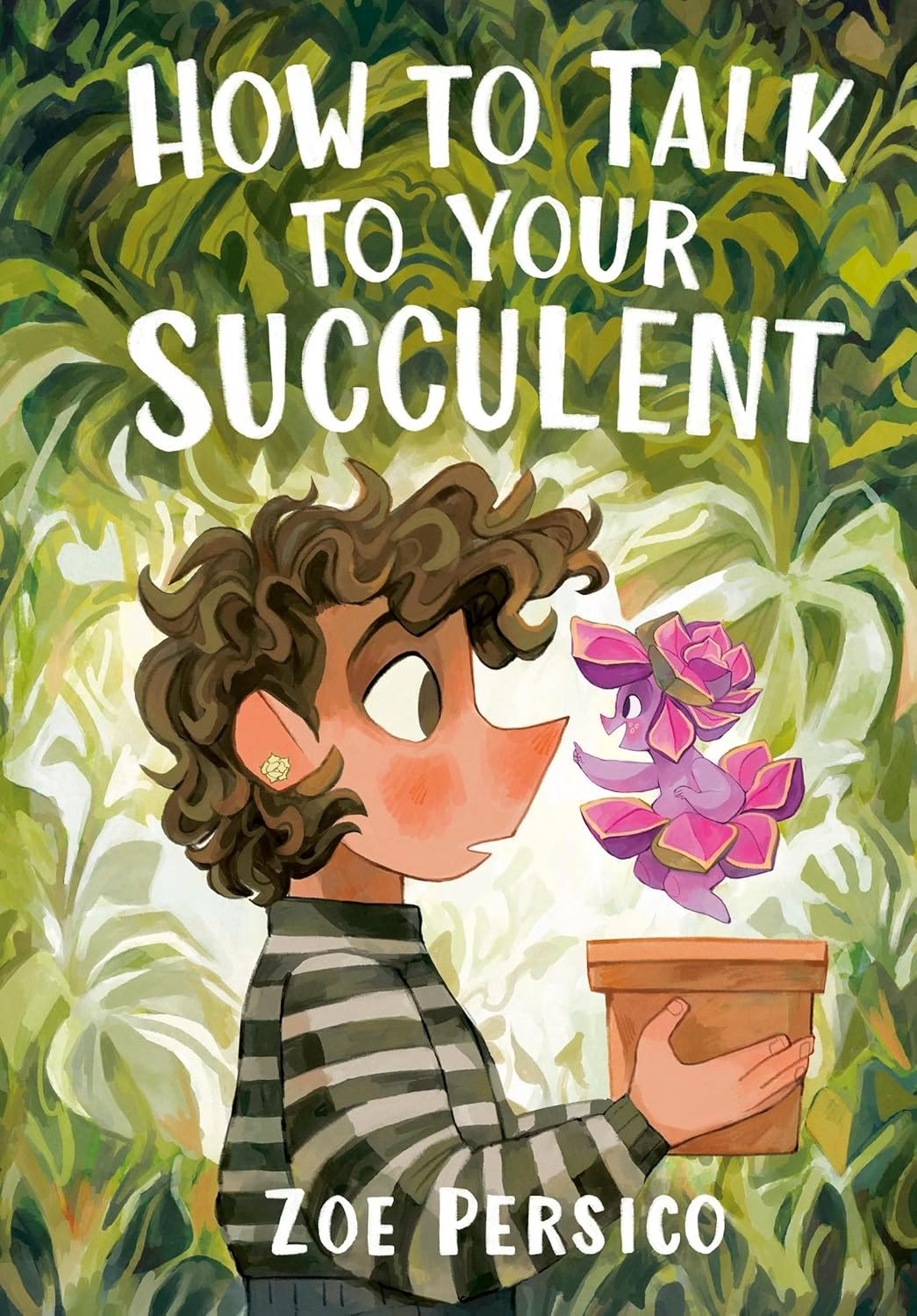
Eleven-year-old Adara and her dad are moving from California to the cold and flat lands of Michigan . . . and it sucks. After Mom’s recent passing, it seems way too soon. Talking to Dad has always been harder than with Mom, but now it’s like walking on eggshells. And why did Dad bring so many of Mom’s houseplants across the country? Her mother might have been called the Plant Whisperer back home, but Adara is beginning to wonder if there is something more to it. But when she meets a little succulent named Perle, she unlocks the same magical ability her mother had: talking to plants!
But taking care of Perle isn’t as easy as it seems — the environment isn’t suited for her, and Adara doesn’t know how to meet her needs. Kind of like the situation Adara herself is in. If only Perle could ask Adara for help . . . and Adara could ask her dad.
With a touch of magic, this debut middle-grade graphic novel explores loneliness, mental health and empathy, and shows how communication, openness and a willingness to listen can help young people — and older people — and plants! — navigate their mental well-being and heal from loss, individually and together.

My Review
I started reading this book before I experienced the death of a parent firsthand. As the person who has taken on caring for my dad’s plants and the plants around our house, I found that the book resonated more with me. For me, it was a soothing, cathartic read, honestly.
Adara and Perle’s relationship is really sweet. Perle is the small succulent that Adara begins caring for. The story draws a strong parallel between what you need to do to ensure your plants are thriving and what you need to do to ensure you and your relationships are thriving. I liked that connection, and it works very well in the context of the story.
I also appreciated that Adara and her dad are grieving differently, and it takes them some time to figure out how to share their grief with one another in a way that’s healing and not more painful.
The color palette is also lovely. The warm, bright colors are so cheerful. When someone is upset, they are shown as being surrounded by darker, thorny vines, indicating they’re not okay. It’s a great visual cue and helps connect the dots between the different characters and their emotions.
Give this one to a plant lover in your life or to someone struggling to make new friends.

Content Notes
Recommended for Ages 8 to 12.
Profanity/Crude Language Content
None.
Romance/Sexual Content
None.
Spiritual Content
Adara sees anthropomorphic plants and can talk to them.
Violent Content
References to the death of a parent. (Happened before the start of the story.)
Drug Content
None.
Note: This post contains affiliate links, which do not cost you anything to use but help support this blog. I borrowed a copy of this book from the public library. All opinions are my own.